
Motor Protection from Power Cut: Save From Your Motor Panel
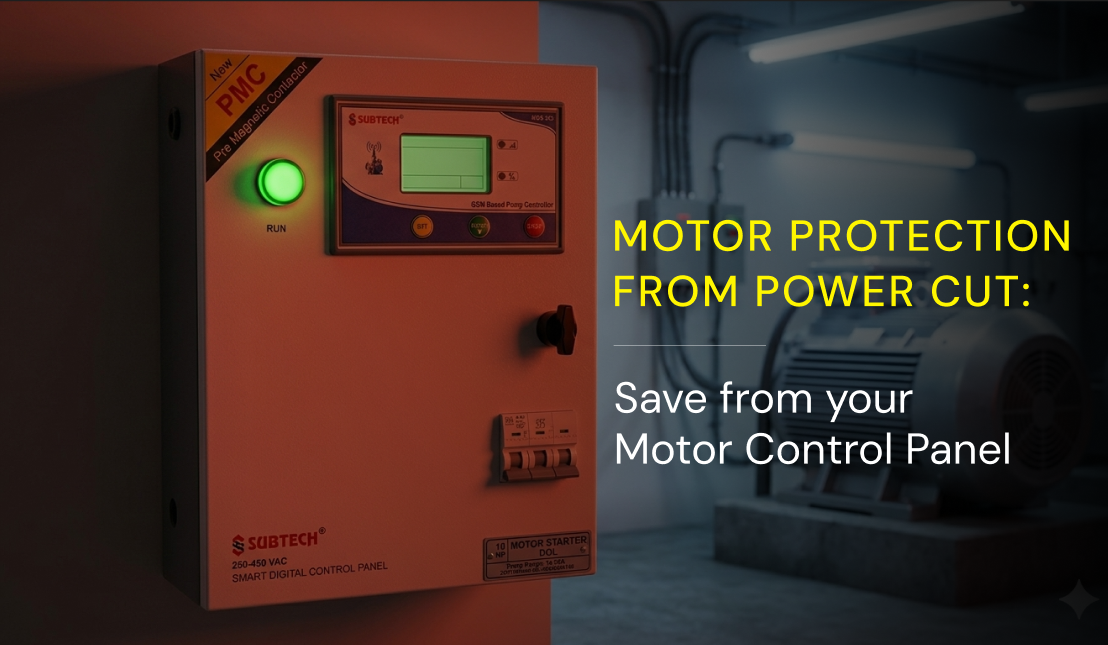
It was a Tuesday afternoon in Ludhiana, Punjab. A garment processing unit lost power for 40 minutes due to a PSPCL maintenance shutdown. When supply returned, six motors restarted simultaneously on their old DOL starters. Within 90 seconds, two motors overheated. By evening, the owner had a repair bill of Rs 64,000 and two days of halted production. The electrician's verdict: "Sir, ye toh hona hi tha." The tragedy? The entire loss was preventable. Motor protection from power cut is not expensive technology reserved for big factories. The difference between a Rs 7,000 panel and a Rs 64,000 repair bill comes down to one decision made before the next power cut hits.
What Is Motor Protection from Power Cut and Why Does It Matter in India?
Motor protection from power cut refers to the electrical and electronic safeguards built into a motor control panel that prevent a motor from being damaged when supply is interrupted and then restored. India's power grid, despite significant improvements under schemes like IPDS and RDSS, still experiences frequent planned and unplanned outages. March to June is historically the most damaging season: DISCOM maintenance shutdowns, summer load shedding, and demand spikes create conditions where motors face multiple restart events in a single day.
The core risk is not the power cut itself. Motors are designed to handle being switched off. The danger lies in what happens the moment electricity returns.
- Voltage surge on restoration: When power comes back, it often arrives with a temporary overvoltage spike as the grid stabilises. A motor sitting idle absorbs this spike directly into its windings.
- Single phasing after cut: Power sometimes returns on only two of three phases. Running a three-phase motor on single phase generates roughly 1.73x the rated current in remaining windings, burning insulation within minutes. How single phasing burns motors
- Simultaneous restart: If multiple motors restart at the same time, inrush current can be 6-8x the full-load current, causing thermal stress and tripping other equipment.
- Phase reversal: After supply restoration or maintenance, phase sequence can reverse, causing pumps to run backwards and damaging impellers and mechanical seals.
Each of these failure modes is detectable. Each is preventable. Yet the majority of SMEs in India still use unprotected DOL starters or local panel boards that offer zero response to these conditions.
Technical Reality: What Happens Inside a Motor During a Power Cut Restart
Consider what happens electrically inside a 5 HP three-phase induction motor, a common size in Indian factories and agricultural installations.
At the moment of power restoration, the motor is stationary. Its rotor has no residual EMF. The stator windings draw peak inrush current, typically 600-800% of full-load current for a standard squirrel cage motor, for 2-8 seconds until the rotor reaches operating speed. If a protection device does not detect and manage this event, and if it coincides with undervoltage (supply below 85% of rated voltage) or single phasing, the winding temperature rises sharply. Class B insulation is rated for a maximum of 130 degrees C. Repeated thermal cycling from power cut restarts degrades insulation silently. A motor that should last 15 years may fail within 3-4 years without proper motor protection from power cut.
As per industry estimates (verify with official BEE or CPRI source before publishing), approximately 35-40% of motor failures in Indian industrial and agricultural settings are directly linked to power supply quality issues.
Types of Motor Protection Panels Available in India
- Basic DOL Starter (no protection) - Protects against: Nothing. Best for: Not recommended. Cost: Rs 1,500-4,000
- DOL Starter with MPU - Protects against: Overload, single phasing, undervoltage. Best for: Small motors, agriculture. Cost: Rs 4,000-9,000
- Star-Delta Starter with protection - Protects against: Inrush current and overload. Best for: Motors above 5 HP. Cost: Rs 8,000-18,000
- Soft Starter Panel - Protects against: Smooth ramp-up, surge protection. Best for: Pumps, compressors, conveyors. Cost: Rs 15,000-60,000
- VFD Panel - Protects against: Full voltage and frequency control, soft restart. Best for: Heavy industry, precision loads. Cost: Rs 25,000-1,50,000+
- Dual-Phase Panel - Protects against: Operates on 2-phase supply. Best for: Rural areas with unreliable 3-phase. Cost: Rs 6,000-14,000
- AMF Panel - Protects against: Detects cut, switches to DG, reconnects safely. Best for: Critical loads, hospitals, data centres. Cost: Rs 40,000-2,00,000+
Note on Dual-Phase Panels: Safety protections including phase failure detection and overload relay are not active in 2-phase operation mode. Use only for loads specifically rated for this configuration.
Real-World Rs Impact: The Cost of Running Without Motor Protection from Power Cut
Consider a mid-size water treatment plant in Uttar Pradesh operating four 10 HP pumps.
Without protection (local panel board):
- Average motor burnout: 1 motor per year
- Rewinding cost: Rs 8,000-12,000 per event
- Replacement motor if irreparable: Rs 18,000-35,000
- Production downtime: 1-2 days at Rs 15,000-25,000 per day
- Emergency electrician: Rs 2,000-5,000
- Annual loss: Rs 43,000-77,000
With Subtech motor protection panel:
- Panel investment: Rs 7,000-14,000 per motor
- Motor replacements: near zero
- Downtime events: near zero
- Protection trips before damage occurs
- 3-year TCO: Rs 7,000 vs Rs 52,500+
The financial case for motor protection from power cut is not complex. It is a single decision that pays back in the first prevented failure.
How Subtech Solves It: Automate. Protect. Perform.
Subtech (S S Power System), based in Greater Noida, has been manufacturing motor control and protection panels since 2010. With Rs 22 Crore turnover, 220+ dealers across India, and clients including GAIL, NTPC, DMRC, Railways, and IITs, Subtech's approach to motor protection from power cut is built into every product it makes.
MPU (Motor Protection Unit): Monitors all critical parameters that cause motor failure: undervoltage, overvoltage, single phasing, phase reversal, phase imbalance, and overload. Trips the contactor before damage occurs. Response time is fast enough to catch the voltage surge that follows power restoration.
PMC (Pre-Magnetic Contactor): Integrates motor protection with control, eliminating separate components. DC-operated solid-state architecture with a claimed 50-year lifespan. The investment made today protects motors for the life of the facility.
VFD Panel: Ramps voltage gradually on each restart regardless of cut duration. Eliminates inrush current stress entirely. Compensates for undervoltage by adjusting frequency, keeping motors running through brief supply dips that would otherwise cause a trip-and-restart cycle.
Command Center and Soldier App: Real-time monitoring of power supply quality at each motor. Instant phone alerts when a motor trips. Prevents the "motor running on single phase for 4 hours" scenario that causes complete winding failure.
How to Choose the Right Motor Protection Panel for Your Application
For agricultural pumps (3-15 HP, rural supply):
Use a DOL Starter with built-in MPU. This gives single-phasing protection, the most common cause of farm motor burnout. If your area has frequent 2-phase supply, ask about Dual-Phase Panel compatibility. Note: safety protections are not active in 2-phase operation mode.
For industrial pumps and compressors (15-75 HP):
Use a Star-Delta Starter with MPU for motors up to 30 HP, or a Soft Starter Panel for motors above 30 HP. The Soft Starter eliminates mechanical stress on couplings and impellers during restarts after power cuts.
For continuous process loads (pumps, fans, conveyors):
Use a VFD Panel. Energy savings of 20-40% offset the higher capital cost within 18-30 months, and motor protection from power cut is a built-in benefit.
For critical facilities (hospitals, data centres, water treatment):
Pair any of the above with an AMF Panel. The AMF detects mains failure, starts the DG set, and transfers load within seconds.
Common Mistakes That Lead to Motor Failure After Power Cuts
- Using a thermal overload relay as the only protection. Thermal overload relays are too slow to respond to the voltage spike in the first 2-3 seconds of power restoration. An MPU is needed for that window.
- Assuming the motor is fine because it started. Repeated thermal cycling from restarts degrades winding insulation silently, until the motor fails at a seemingly random moment.
- Buying a local panel board to save money. As the TCO calculation above shows, the cost saving on the panel purchase is erased by a single repair event.
- Installing a VFD but not setting the restart parameters. A VFD must be configured correctly for automatic restart after power restoration. An improperly configured VFD may restart the motor during an unstable supply period.
- No remote monitoring for sites with multiple motors. A motor can run in a damaged state for hours before someone physically checks it. Command Center and Soldier App turn motor protection from reactive to proactive.
Why Subtech: Certifications, Quality, and Reach
Subtech (S S Power System) holds ISO 9001, ISO 14001, ISO 45001, and ISO 50001 certifications, along with ZED Silver status, CPRI and ERTL approvals, CE marking, and MSME registration. These represent the testing, traceability, and process control that make the difference between a panel that performs consistently and one that fails when it matters most.
With 220+ dealers and a direct sales team serving Greater Noida, NCR, Uttar Pradesh, and pan-India through the dealer network, Subtech panels are available for on-site assessment, installation support, and post-sales service.
Related Reading
- How to Stop Single Phasing from Burning Your Three-Phase Motor
- VFD Panel Guide: Why Every Indian Factory Needs Variable Frequency Drives
- AMF Panel: How Auto Mains Failure Protection Works in India
- DOL Starter Complete Guide: Selection, Protection, and Installation
Protect Your Motor Before the Next Power Cut Hits
Summer is here. DISCOM maintenance schedules are active across Delhi, Bangalore, and Chennai. The next power cut is not a question of if, it is a question of when, and whether your motor control panel is ready for it.
Subtech offers a free site assessment for industrial and commercial customers to evaluate your current motor protection setup and recommend the right panel configuration. Contact our team via the Soldier App or reach your nearest Subtech dealer to get a quote this week.
Because at Subtech, every panel we make lives by one promise: Automate. Protect. Perform.
Always consult a certified electrician for installation. Specifications may vary by model. Cost figures are indicative estimates. Verify with official BEE or CPRI sources where cited.
Suggested Posts
View all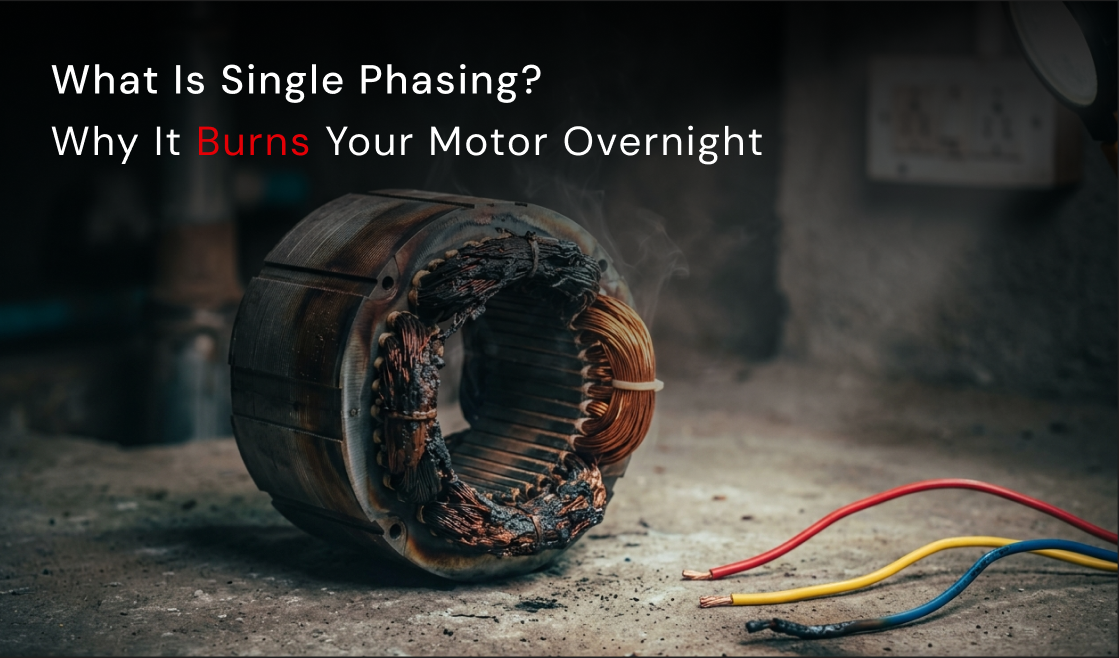

Leave a Comment
Your email address will not be published.