
India Has 2 Crore Motors Running With Zero Protection. Is Yours One of Them?

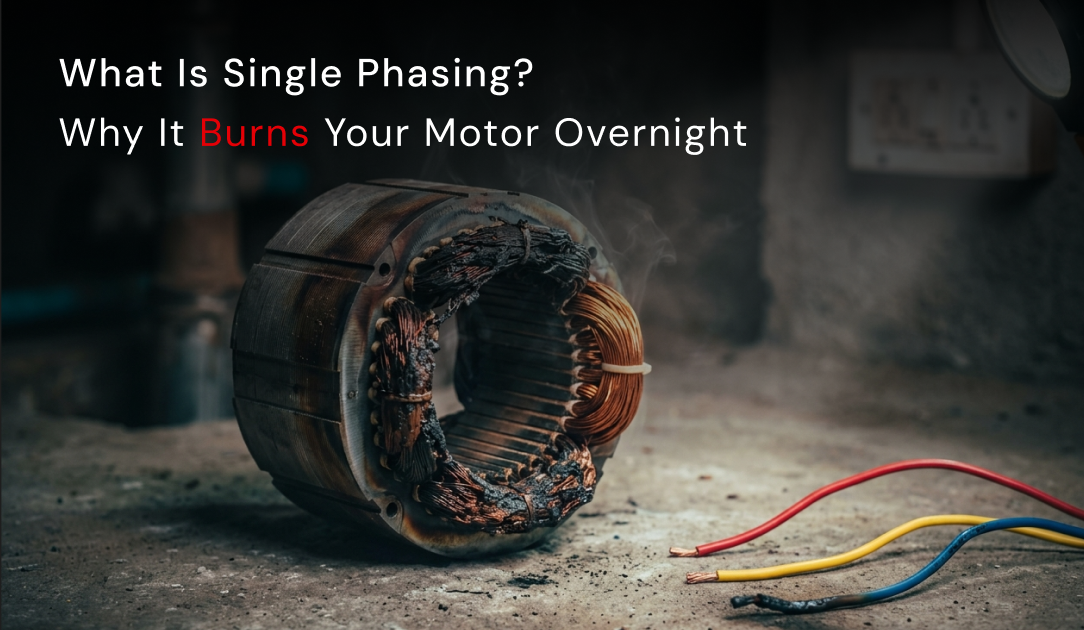
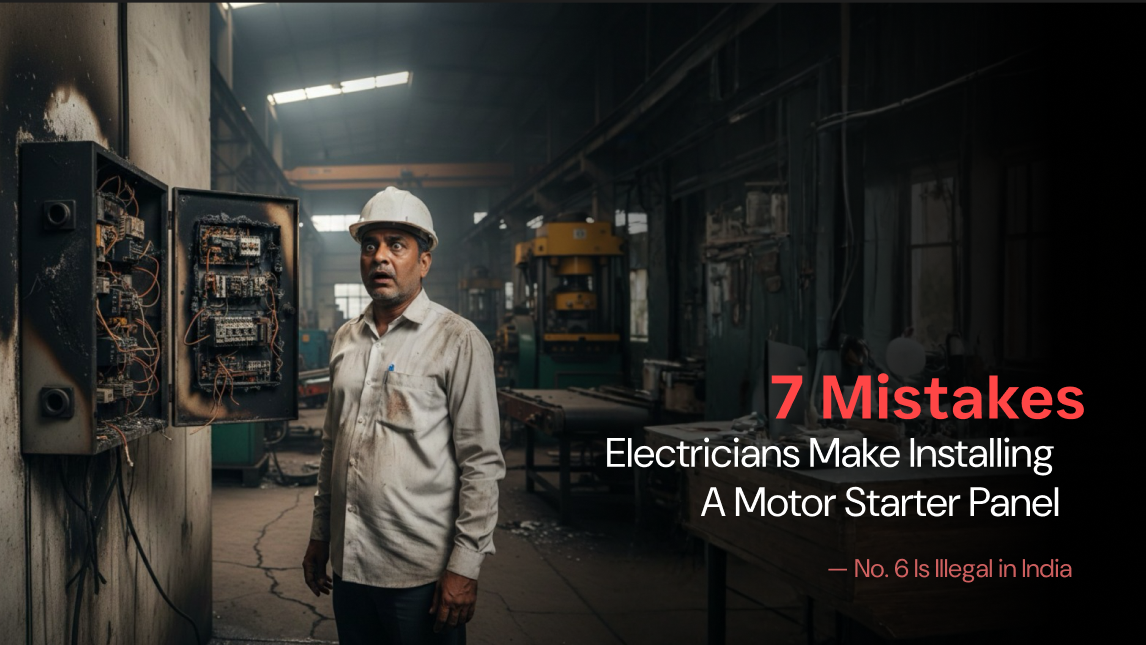
Stop for a moment. Somewhere near you, a motor is running right now. In a borewell under a field in Haryana. In a factory in Kanpur. In a pump room inside a housing society in Noida. In a JJM pump house in a village in Rajasthan that just got its first tap water connection. That motor is running. And there is a very good chance it has no real protection. Not because the owner is careless. Not because the electrician made a mistake. But because across India, we have collectively accepted a dangerous myth: that if a motor has a starter, it is protected. It is not. This blog is about that gap. The gap between having a starter and having protection. Between thinking your motor is safe and knowing it is safe. Between a Rs 1,500 box on the wall and a system that will actually save your motor when something goes wrong at 2 AM on a Tuesday in June. India runs on electric motors. Agriculture, industry, municipal water supply, commercial buildings, residential complexes: every sector depends on motors running reliably, every hour, every day. Conservative estimates from industry data and government infrastructure reports suggest India has upwards of 6 to 8 crore installed electric motors across all sectors. Agricultural pump motors alone account for over 2 crore units, powering tube wells and borewells across UP, Rajasthan, Punjab, Maharashtra, Andhra Pradesh, and every other agricultural state. Of these, the proportion running with adequate digital protection is strikingly small. Most agricultural motors run on basic thermal relay starters. Most small industrial motors run on DOL starters with components that were never designed for Indian ambient temperatures. Most residential pump motors run on single-phase starters that provide minimal protection beyond a basic MCB. The result: India loses an estimated 40 lakh motors to preventable failures every year. Rewindings, replacements, downtime, production loss. The combined economic cost runs into thousands of crores annually. And almost all of it is preventable. To understand what a motor starter actually does versus what it should do, read this first: What Is a Motor Starter? Function, Types and Working When we say a motor has zero protection, we do not mean it has no starter at all. Almost every motor in India has some form of starter connected to it. What we mean is this: the protection on most motors will not work when it is actually needed. Here is the specific scenario that plays out across India thousands of times every summer: A factory in UP runs a 10 HP motor on a DOL starter with a thermal overload relay. The relay was set correctly when installed in February, at 22 degrees Celsius ambient temperature. By May, the factory floor temperature reaches 48 degrees. The bimetallic strip inside the relay has been bending from the ambient heat for three months. Its calibration has drifted significantly from the February setting. The motor draws slightly elevated current because of the heat. The relay should trip. But because the strip is already bent from ambient temperature, it does not register the excess current as a trip condition. The motor keeps running. The winding temperature keeps climbing. At 3 AM, with nobody in the factory, the winding insulation fails. The motor burns. The owner finds a burnt motor in the morning. The electrician is called. The electrician checks the relay. The relay setting looks correct. Nobody understands what happened. The motor gets rewound for Rs 18,000. The same starter goes back on the same motor. The same thing will happen next summer. This is not a rare scenario. It is the standard failure pattern of thermal relay protection in Indian summer conditions. And it is happening right now in factories, farms, and pump houses across the country. Read what happens when this goes wrong at scale: This Factory in UP Lost Rs 3 Lakh in One Summer. The Reason Was a Rs 1,500 Starter. These are not theoretical failure modes. They are documented, field-verified conditions that occur regularly in Indian operating environments. Condition 1: Summer ambient temperature above 40 degrees Celsius Every thermal overload relay in every standard motor starter is calibrated at 20 to 25 degrees Celsius. This is the IEC standard. It is the temperature of a factory in Germany. It is not the temperature of a factory in Kanpur in May. It is not the temperature of a pump house in Rajasthan in June. It is not the temperature of a motor installed in an open agricultural field under direct sun anywhere in India between April and September. When ambient temperature exceeds 40 degrees, thermal relays begin to drift. By 48 to 50 degrees, many relays have drifted enough to miss a genuine overload condition entirely. Your motor is drawing dangerous current. The relay does not trip. The motor burns. If your motor starter uses a thermal overload relay and your motor operates in an environment above 40 degrees Celsius for more than a few months a year, your motor currently has inadequate overload protection. This applies to the majority of agricultural and industrial motor installations across India. Condition 2: Single phasing at night or during unmanned hours Single phasing: one of the three supply phases is lost. A storm breaks an overhead conductor. A distribution fuse blows on one phase. A loose connection at the pole fails. A three-phase motor running on two phases draws enormous current on the surviving phases. Without protection that independently monitors all three phases and cuts the motor within seconds, the motor burns within 2 to 4 minutes. The problem: most thermal relay-based starters do not provide genuine single phasing protection under Indian field conditions. The relay may eventually respond to the increased current on the surviving phases, but in summer conditions with an already-drifted relay set conservatively to avoid nuisance tripping, the response is too slow. The motor burns before the relay trips. Single phasing events happen most often during storms, at night, in conditions where no operator is present. Your starter's protection is most likely to fail exactly when you are not there to notice. Condition 3: Repeated power cuts with voltage spikes on resumption In rural India and in many industrial areas, power cuts happen 8 to 15 times a day. Every time power resumes, there is a voltage spike in the milliseconds before the supply stabilizes. These spikes stress motor windings and contactor contacts cumulatively. More critically: when power resumes after a cut, a motor that auto-restarts immediately draws full starting current into a supply that may not yet be stable. Without a programmable start delay, this repeated pattern of spike plus inrush current accelerates winding degradation significantly. Basic starters have no start delay programmability. The motor restarts immediately on every power resumption. 10 cuts per day equals 10 uncontrolled restarts per day. Over a season, the cumulative damage is substantial. See how these conditions affect agricultural motors differently: Why Agriculture Motors Burn More Than Industrial Motors in India India's Jal Jeevan Mission 2.0 is building pump infrastructure at a scale the country has never seen before. Lakhs of new pump houses. Crores of new pump motor installations. Every one of them needs protection that actually works. JJM 2.0 has shifted focus from infrastructure creation to service delivery. Gram Panchayats are now responsible for ensuring water flows every day. A pump motor that burns means a village without water. In a country where motor failure is already the primary reason for water supply disruption in rural areas, installing these new pumps without adequate protection is building a crisis in slow motion. The same three failure conditions described above apply with even greater force to JJM pump installations: unmanned operation for 8 to 16 hours daily, rural feeder voltage dropping to 160V during peak agricultural hours, single phasing from storm damage with no operator present to respond. Every unprotected JJM motor is a future headline about a village that got tap water and then lost it. The gap between a motor with zero real protection and one with genuine protection is not a gap of lakhs of rupees. In most applications, it is a gap of Rs 5,000 to Rs 25,000 depending on HP rating and features. Here is what that difference buys: A microcontroller-based protection system like Subtech's MPU measures actual current electronically. It has no bimetallic strip to drift with ambient temperature. Its overload protection accuracy at 50 degrees Celsius is identical to its accuracy at 25 degrees. The summer ambient temperature problem is completely eliminated. Independent phase monitoring detects single phasing in under 2 seconds and cuts the motor immediately. Not after the thermal relay eventually responds. Within 2 seconds of phase loss. A motor that previously burned in 3 minutes on two phases now trips safely before any damage occurs. A programmable start delay, typically set to 10 to 30 seconds, allows supply voltage to stabilize after a power cut before the motor restarts. The repeated spike-plus-inrush pattern that degrades windings over a season is eliminated. A digital display with error codes tells the electrician exactly what triggered a trip. No guesswork. No relay setting increases that strip away protection. The fault is displayed. The cause is understood. The fix is specific. This is not a premium upgrade for large factories. These are basic requirements for adequate motor protection in Indian conditions. They are available in Subtech's Smart Motor Control Panels from the entry-level models upward. If your application uses submersible pumps, also read: Best Motor Starter for Submersible and Water Pumps in India Before your next purchase decision on a motor starter, do this calculation. Take the cost of your most expensive motor failure in the last 3 years. Include the rewind or replacement cost, the electrician charges, and an honest estimate of what the downtime cost you in lost production, lost irrigation, or lost revenue. Now write down the cost of a properly rated Smart Motor Control Panel for that same motor application. In almost every case, the panel cost is a fraction of a single incident's total loss. In most cases, it pays for itself the first time it prevents a motor burnout. The factory in UP that lost Rs 3 lakh in one summer spent Rs 1,500 on starters. Proper panels for the same application: Rs 30,000 for all four motors. The math is not complicated. The only question is whether you do this calculation before the next failure or after it. Also read: 7 Mistakes Electricians Make While Installing a Motor Starter Panel — several of the most expensive mistakes happen at installation, before the motor even runs for the first time. Subtech has been manufacturing Smart Motor Control Panels in Greater Noida since 1998. Every design decision is made with Indian field conditions as the primary requirement. The MPU (Motor Protection Unit) is Subtech's proprietary microcontroller-based protection module. It replaces the thermal overload relay, phase monitoring relay, voltage monitoring relay, run hour meter, voltmeter, and ammeter with a single integrated digital unit. Protection accuracy is temperature-independent. Error codes display the exact fault condition on a digital screen. Auto and manual restart modes are fully programmable. The PMC (Pre-Magnetic Contactor) is Subtech's proprietary switching technology. It operates on a 20-28V DC coil, working correctly from 140V to 480V AC supply. Coil burning due to voltage fluctuation is eliminated. Contact chattering that damages motor windings over time is eliminated. Subtech provides a 5-year warranty on PMC coil burning. Double single-phasing protection detects phase loss on both the input side and the output side of the panel. This provides protection that was previously only available in VFD systems, now standard in Subtech motor starter panels. For applications requiring remote operation and monitoring, Subtech panels are available with 4G GSM connectivity. Motor start and stop from a mobile phone. Real-time alerts for fault conditions. Run hour tracking and voltage monitoring remotely. This is specifically designed for agricultural and JJM pump installations where unmanned operation requires remote visibility. If your application may benefit from soft starting to reduce inrush current and mechanical stress, read: What Is a Soft Starter? Complete Beginner's Guide Design principle: "Na Motor Jale, Na Starter." Contact Subtech for a free assessment of your current motor protection setup and a recommendation for the right panel for your application and budget. Ask your electrician four specific questions. First: does the overload protection use a thermal relay or microcontroller-based electronic sensing? Second: what happens to the motor if one phase is lost at night? Third: has the overload relay setting ever been increased to stop nuisance tripping? Fourth: does the starter display an error code when it trips, or just a simple trip with no information? If the answers are thermal relay, unclear, yes, and no display respectively, your motor currently has inadequate protection for Indian field conditions. The financial case for digital protection is strongest for small motors precisely because they are more numerous and individually more likely to be replaced entirely when they burn, rather than rewound. A 3 HP submersible pump motor replacement costs Rs 15,000 to Rs 25,000. A Smart Motor Control Panel with digital protection for the same motor costs Rs 6,000 to Rs 10,000. The protection investment pays for itself the first time it prevents a motor replacement. For motors running in unattended agricultural or residential applications, digital protection is not a premium option. It is the minimum adequate protection. Overload protection detects excessive current on the running phases and trips the motor if the current exceeds a set threshold for a defined time. Single phasing protection detects the complete loss of one phase regardless of the current level on the surviving phases. These are two separate failure modes requiring two separate protection functions. A starter with only overload protection may or may not detect a single phasing event quickly enough to prevent motor damage, depending on load level, ambient temperature, and relay calibration. A starter with independent electronic phase monitoring detects single phasing within seconds, regardless of current levels. A three-phase motor operating with complete digital protection, correct HP rating, and a properly rated starter in Indian industrial conditions should run reliably for 10 to 20 years with normal maintenance. Motors operating with inadequate thermal relay protection in Indian summer conditions typically require rewinding within 3 to 5 years and complete replacement within 6 to 10 years. The difference is not primarily the quality of the motor. It is the accumulated damage from repeated overload events, single phasing events, and voltage spike events that proper protection would have prevented entirely.India Has 2 Crore Electric Motors Running Right Now With Zero Protection. Here Is What Happens When One of Them Is Yours.
The Scale of the Problem Nobody Is Measuring
What "Zero Protection" Actually Means in the Field
Three Specific Conditions Where Your Starter Will Fail to Protect Your Motor
The JJM 2.0 Connection: Why This Problem Is About to Get Much Bigger
What the Difference Actually Looks Like
The Calculation Every Motor Owner Needs to Do Once
What Genuine Motor Protection Looks Like: Subtech Smart Motor Control Panels
Frequently Asked Questions
How do I know if my current motor starter is providing real protection?
Is digital motor protection worth the extra cost for small motors under 5 HP?
What is the difference between single phasing protection and overload protection?
How long should a properly protected motor last compared to an unprotected one?
Suggested Posts
View all
Leave a Comment
Your email address will not be published.